




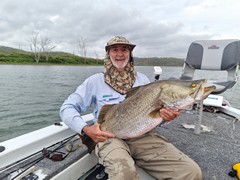


Freshwater
Freshwater environments carry a different kind of stillness.
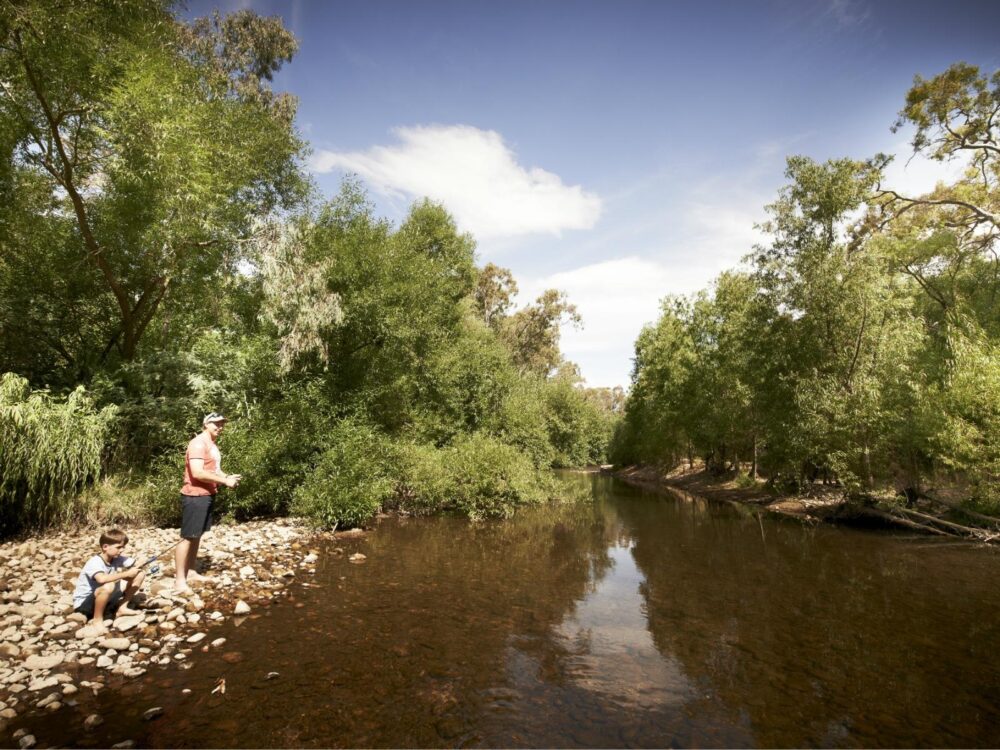
Removed from the influence of tides and swell, they are shaped instead by gravity, terrain, and time. Water moves in one direction, guided by the contours of the land, gathering in pools, narrowing through runs, and slowing again as it reaches wider, quieter sections. Lakes and impoundments hold that movement in place, softening it into something less immediate, but no less structured.
At first, it can seem simpler.
There is no visible push and pull of the tide, no constant reshaping from ocean forces. But with time, a different complexity begins to emerge — one built on subtle variation rather than constant motion. Depth changes gradually. Structure is often hidden. Movement is present, but restrained.
The system reveals itself more slowly.
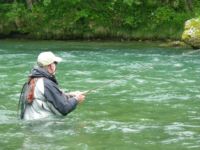
In rivers and streams, current defines everything. Faster water carries oxygen and food, while slower sections offer rest and shelter. Fish move between these zones, not randomly, but in response to the balance between energy and opportunity. A bend in the river, a submerged log, or a slight depression in the bottom can be enough to create a holding position.
In still water, the patterns shift again.
Without current to concentrate movement, other forces take over. Light, temperature, and wind begin to influence where life gathers. Shorelines warm first. Weed beds provide cover and food. Subtle drop-offs create pathways between shallow and deep water. What appears featureless at a glance often holds structure that only becomes apparent through repeated observation.
Bait is less visible here, but no less important.
Small fish, insects, and aquatic life form the base of the system, often moving in ways that are difficult to detect from above. Surface disturbances, occasional rises, or slight changes in water texture can hint at what is happening below, but much of it remains unseen.
Predators respond with a measured approach.
They hold in positions that offer both access to food and a degree of concealment. In moving water, this often means sitting just out of the main current, ready to intercept what passes. In still water, it may involve patrolling edges — the boundary between weed and open water, or shallow flats and deeper sections.
These behaviours are consistent, even if they are not always obvious.
To understand freshwater is to become comfortable with that subtlety. It requires a slower pace of observation, a willingness to notice small details, and an acceptance that much of the system operates below the surface.
Time of day and seasonal change play a greater role here as well.
Light levels influence activity, with early morning and late afternoon often bringing increased movement. Temperature shifts, particularly across seasons, affect where fish hold and how actively they feed. These changes are gradual, but they shape the rhythm of the environment in lasting ways.
Those who spend time in freshwater systems come to appreciate this quiet consistency.
There are fewer obvious signals, fewer moments of sudden intensity. Instead, understanding builds through repetition — recognising how certain features hold fish, how conditions influence behaviour, and how small variations can change the outcome.
It is a more reflective form of fishing.
Less about reacting to movement, and more about anticipating it. Less about covering ground, and more about understanding the piece of water in front of you.
In that way, freshwater offers something distinct.
A system that rewards patience, observation, and a deeper awareness of how life settles and moves when the influence of larger forces is removed.
Published on :Nov 25,2009 =NSW= Tallowa Dam was constructed at the confluence of the Kangaroo and Shoalhaven Rivers in 1976 for the Sydney Catchment Authority to form what is known as Lake Yarrunga. Lake Yarrunga is a popular recreational waterway and particularly popular as a canoe / kayak...
Last Updated: May 2026Freshwater environments carry a different kind of stillness. Removed from the influence of tides and swell, they are shaped instead by gravity, terrain, and time. Water moves in one direction, guided by the contours of the land, gathering in pools, narrowing through runs, and slowing again as it...
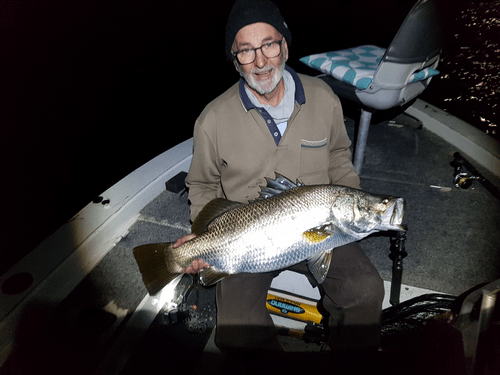
Last Updated: April 2026Over time I have come to understand that there are two distinct classes of Barramundi in Lake Awoonga and other similar freshwater impoundments ... "residents" and "travelers". Residents Barra are released into Lake Awoonga generally at a range of sizes from fingerlings to grown on fish of around...
Last Updated: March 2026