






Fly Boxes
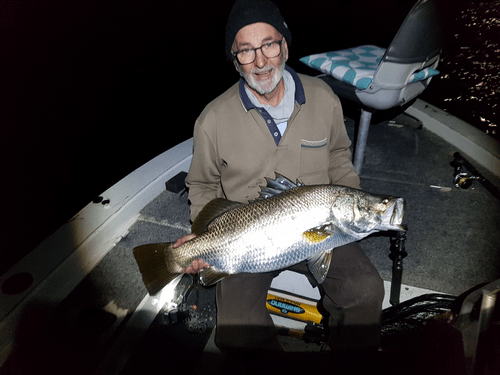
== I have fished the Boyne pretty much through all seasons and understand why it is regarded as one of the iconic fishing locations for the Gladstone Region. It can produces Barramundi all year round even though the number caught is often low. Other target species include Mangrove Jack, Grunter,…
Last Updated: May 2026==Located near Imbil south of Gympie Borumba Dam is unique in that it offers both great Bass and Saratoga fly fishing. The layout of the lake is interesting in itself and basically forms a cross. On the north east axis you have the dam wall and main lake and opposite that you have the Yabba Creek…
Last Updated: May 2026==Cania Dam has a reputation of being an all round fishing venue but in reality for me it is best suited to the warmer months when there is plenty of insect activity. Even then, for the best results, fish a morning session from at least half an hour before sun rise to when the dawn bite window…
Last Updated: May 2026== Mast head and other off shore reefs Rundle Island (top of Curtis Island) Facing island reefs including Perl Rocks and Sable Chief Jenny Lind and Seal rocks Channel markers Gear options: 1) General fishing: 15/50 with 30lb braid, 50 flouro and a #4 fastatch clip. This can fish for “big fish”…
Last Updated: May 2026Mudeyes are the nymphal stage of the Dragonfly. There are two families that are particularly important to freshwater fisher folk in Australia. The Couta Mudeye is of the Family Aeshnidae, genus Hemianax and is one of the most popular freshwater fish bait throughout Australia. The lava or nymph are…
Last Updated: April 2026My first fish on fly fell to the magic of a Woolly Bugger and many have gone the same way since then. With its origins in America where it appears to be tied, as a Leach imitation there is also an English version with bead chin eyes called a Dog Nobler. Whatever the name it's a very good fly. It's…
Last Updated: April 2026From what I can gather the original Wiggle Minnow was conceived by Mark Felty of Felty’s flies in Sydney. By varying the materials used, the colours and size I have accounted for trout, bream, flathead, mangrove jack and even barramundi on wiggle minnows. The recipe I have set out below is just one…
Last Updated: April 2026Large populations of dark olive Yabbies of the Cherax Genus have developed in both Lake Jindabyne and Lake Eucumbene. Many anglers suggest that the Yabby has been responsible for changing the feeding habits of trout in the lakes as the populations of Yabbies have increased. In fact in both Lake…
Last Updated: April 2026This fly has stood the test of time and has been on this web site since 2005. Over the last 10 or so years it has been my 'go to' fly when fishing to sighted fish or prospecting the shores of Lake Jindabyne particularly around our home village of Kalkite. The medium weight of the TMC 3769 hook is…
Last Updated: April 2026As many of you will be aware there is a Welsh fly called a "Green Peter". It was designed as a dry fly. In a crunch one day when I was fishing a slick and targeting fish that were taking just below the surface I included a Green Peter dry fly in my team with two English wee wets behind. There was…
Last Updated: April 2026There are plenty of "Blobs" around but many of them look very much as the name suggests – just a blob of fur and feather. This is a "blob with attitude" and because it actually looks like a fly I find it a little easier to tie on than its very basic second cousins. It has a place in my fly box…
Last Updated: April 2026A variant of a old English wet fly this variant is in the same class as an Alexandra this fly as an attractor fly particularly when rainbows are the target. It is different to the original in that the dyed blue hackle has been replaced by blue barbells from the chest feathers of a male peacock and…
Last Updated: April 2026In entomological terms a 'Bibio' is a March fly or St. Mark's fly both of which are true flies of the order Diptera. True Bibio larvae grow up in grassy areas and are herbivores and scavengers feeding on dead vegetation or living plant roots. They do not spend any part of their life cycle in the…
Last Updated: April 2026The name of this fly is Welsh and literally means "little devil". Regarded by many as one of the best flies ever created this fly is a great tie on as trout take it for everything from midge pupa right through to nymphs and stick caddis. I normally fish smaller sizes as a midge pupa and from time…
Last Updated: April 2026The 'Fiona' (Shrek's lady) as I have called this fly is a counter balance for the increasingly popular fly called a Shrek. It is in fact the same tie as the Shrek except that it incorporates different coloured materials. Both are basically Woolly Buggers by design and just as the emerald green is a…
Last Updated: April 2026This fly was out of left field as far as I was concerned and when I was first introduced to it I had no great expectation of it finding its way into my fly box. I was wrong. The bright tinsel body certainly stands out and rather than spooking fish as I expected it seems to trigger a response from…
Last Updated: April 2026This wonderfully named fly came to light in Australia when John Horsey published an article about the 2008 Fly Fishing Championships that he came fourth in just a few months earlier. He went onto say 'I switched to a slime line and put a Black Straggle Fritz Taddy on the point, kept the Damsel on…
Last Updated: April 2026The Zulu tied with a black hackle body and a black tail has origins that go back to circa 1600 England. This fly deviates from the standard a little and has a white under-tail of antron tied in to represents a trailing shuck, seals fur dubbing and a soft hackle at the front so if it is used as a…
Last Updated: April 2026In recent years I have found that other than the traditional woolly bugger of around 50 mm in length there is also a demand for very small woolly buggers. In fact I would go as far as to say that in most of the fisheries that I haunt 'mini woolly buggers' of from 25 mm to 30 mm in length are often…
Last Updated: April 2026My first fish on fly fell to the magic of a Woolly Bugger and many have gone the same way since then. The woolly bugger has its origins in America where it appears to be tied, as a leach imitation but there is also an English version with bead chin eyes called a Dog Nobler. Whatever the name it's a…
Last Updated: April 2026My first fish on fly fell to the magic of a Woolly Bugger and many have gone the same way since then. With its origins in America where it appears to be tied, as a Leach imitation there is also an English version with bead chin eyes called a Dog Nobler. Whatever the name it’s a very good fly. Its…
Last Updated: April 2026This fly is accredited as being the first Australian designed and made fly and whilst the originator is not known with certainty there is highly persuasive evidence that suggests that it was conceived around 1896 as a grass hopper imitation for targeting fish on the Bredbo river just outside of…
Last Updated: April 2026The Dunkeld is certainly one of my top 2 or 3 middle dropper flies for lock style fly fishing. Until mid 2012 I was using a version of the Dunkeld that had a hackle Palmered along the body as in the original. At that time I was experimenting with "fuzzeled" bodies an an alternative to bodies with a…
Last Updated: April 2026Another old fly this little beauty has its origins on the salmon and trout streams of Ireland probably around the 1820's. Its alternative name of 'hares ear and red' gives away its ancestry. Early versions of the fly presented were no more than a gold ribbed hares ear with a woodcock type wing…
Last Updated: April 2026In entomological terms a 'Bibio' is a March fly or St. Mark's fly both of which are true flies of the order Diptera. True Bibio larvae grow up in grassy areas and are herbivores and scavengers feeding on dead vegetation or living plant roots. They do not spend any part of their life cycle in the…
Last Updated: April 2026The name of this fly is Welsh and literally means "little devil". Regarded by many as one of the best flies ever created this fly is a great tie on as trout take it for everything from midge pupa right through to nymphs and stick caddis. I normally fish smaller sizes as a midge pupa and from time…
Last Updated: April 2026My bag fly is based on the Tom Jones flies and is suggestive of a number of items that find themselves on the trout's menu from time to time. They vary from the original Tom Jones flies in the materials used and the inclusion of an under-tail and beard. They are a good buggy looking fly. In…
Last Updated: April 2026It was the summer of 2000 that I first became involved on English style Loch Style fly fishing and slowly I accumulated an arsenal of techniques and flies. The Mallard & Claret was the first for me in this series. Whilst it has been tweaked at the edges a little this Mallard & Claret…
Last Updated: April 2026The cormorant fly is a popular loch fly and particularly in rainbow trout waters. The original tie has a peacock herl body with silver rib, no tag or tail and no lateral flash so this competition version has a few more trigger points. It can be tied with a brass or glass bead head and the colour of…
Last Updated: April 2026The Cormorant was popularised by Graham Pearson who was a boatman in one of the English youth internationals. As the story goes it was one of those competition days when the fishing was tough and very few anglers boated fish. One of Pearsons angler bucked the trend and landed three fish using a…
Last Updated: April 2026There are over 100 different species of Damselflies in Australia and the lava which are usually slender with three terminal gills, that present as tails, form a significant part of a trout's diet. Their bodies have around 10 segments, they have 6 legs and they often have emerging wings. Most appear…
Last Updated: April 2026One of the first loch flies I was introduced was a mallard and claret tied in a traditional way with a pair of feather slip wings. I thought it was the bees knees as a bob fly and used it any time when mayflies were around. Over time I modified the tie until I reached the variation below. For me…
Last Updated: April 2026One of the first wet flies tied was the coachman and that consisted of just a black body and a set of white hackle slip wings. Over time flies have evolved and one path the coachman took was the substitution of a "royal" body for the simple black body. Many versions have been tied since and this is…
Last Updated: April 2026Even though I am not sure that I have seen any orange naturals that trout aggressively target they do readily take this fly in a range of conditions in both lakes and rivers. Tied with natural seals fur it is a fly that sits well on the water and easily sheds water with a snappy false cast. Easy to…
Last Updated: April 2026My first fish on fly fell to the magic of a Woolly Bugger and many have gone the same way since then. With its origins in America where it appears to be tied, as a Leach imitation there is also an English version with bead chain eyes called a Dog Nobler. Whatever the name it's a very good fly. It's…
Last Updated: April 2026Based on the design of the carrot fly this version is particularly appealing to fish feeding on emerging Mayfly in Tasmania's central and western lake. Materials Hook Thread Body Hackle Hanak H300BL #12 Danville's orange 70 denier Orange seals fur Brown cock hackle Process A Wind the thread…
Last Updated: April 2026I first used this fly in Canada in 2016 at the Commonwealth Fly Fishing Championships. Tied by Josh Flowers from Tasmania I doubt that a session on the lakes passed without every team member tying this fly on their version of this fly on for at lease some of the time. I have since learned that it’s…
Last Updated: April 2026When Chironomids are around they tend to be around in large numbers and trout become quickly switched on and gorge on them. There are number of techniques to target chironomid feeders and one of my favourite is to fish three chironomid imitations with the heaviest on the point with a long leader on…
Last Updated: April 2026Any time there are caddis on the wing this fly is worth a swim in the middle position of a team of three loch flies. One of the most important things to remember when tying this fly is not to overdress it … make sure you can see a gap between the two wings even when the rabbit fur is dry and…
Last Updated: April 2026This fly is somewhat of a fusion of a traditional caddis pupa emerger and a squirmy wormy and it has earned a place in my fly box as a great middle or top dropper fly for both a loch style team and a river team. It is certainly worth tying on in the early stages of a caddis hatch as the pupas are…
Last Updated: April 2026Flies that represent spiders and beetles are very buggy and suggestive flies. Weather being used as a polaroiding fly, a static wet, one of the flies in a team of loch style flies, or a fly to cover rising fish spider type soft hackle flies may be taken as a snail, submerged beetle, drowned…
Last Updated: April 2026There are over 470 species of Caddis flies in Australia and they all lay their copious numbers of eggs in water. Given the numbers of caddis pupa (or nymphs) that hatch it's not surprising that Caddis fly pupa form arguably the largest part of a trouts diet. Most caddis grubs make a retreat of…
Last Updated: April 2026In fast flowing water or where you just want your nymph to stand out a little a Flash Back nymph is an option. Whilst this nymph is not tied to represent the nymphal (sub imago or pupa) stage of any specific insect it is a good “buggy” looking fly and readily accepted by trout. I generally only…
Last Updated: April 2026Based on the Montana nymph which was developed in the earlier days of fly fishing in Montana America as an imitation for a stone fly. It has two distinct uses. The first is as a bait fly when fished behind a bead head nymph in faster rivers and streams. The second use is as as a middle dropper fly…
Last Updated: April 2026This is the lava of a Caddis fly (or Sedge) and is common from September through to December particularly in the flooded margins of lakes. Can be fished relatively static as a prospecting fly with a very slow retrieve or used as an ambush fly when polaroiding. Materials Hook Thread Head Legs…
Last Updated: April 2026Whilst there are over 5000 different species of aquatic bugs Australia only two are of significance to the fly fisherman. The family Corixidae or Water Boatman come in a variety of shapes but all generally consist of a body between 5 and 10 mm in length. They have two sets of wings with the font…
Last Updated: April 2026There are over 470 species of Caddis flies in Australia and they all lay their copious numbers of eggs in water. Given the numbers of caddis pupa (or nymphs) that hatch it's not surprising that Caddis fly pupa form arguably the largest part of a trout's diet. Caddis flies are of the order…
Last Updated: April 2026This is more of a class of fly rather than just one fly. A very generic representation of a caddis nymph tied on a Czech nymph type hook. A good buggy looking fly that also has a hot spot emerging wing of UV material. Caddis fly (or Sedge) are of the order Trichoptera and are common throughout the…
Last Updated: April 2026There are over 470 species of Caddis flies in Australia and they all lay their copious numbers of eggs in water. Given the numbers of caddis pupa (or nymphs) that hatch it's not surprising that Caddis fly pupa form arguably the largest part of a trout's diet. Caddis flies are of the order…
Last Updated: April 2026I subscribe to a couple of British fly fishing magazines so its not surprising that I have been aware of "Mary" nymphs for quite a while. They are a recurring feature of many of the articles. I had tied and used them on and off for few years but they really didn't come into their own until I…
Last Updated: April 2026Many anglers think that scud are shrimp but in fact they are not. Whilst they are Crustaceans they are of the Amphipoda order and are distinguished from shrimp both in habit and design. They spend their life inhabiting the detritus matter in both flowing and still water and take on the colour of…
Last Updated: April 2026Flash back nymphs have been around for a long time but they still work. In my view the only trick associated with this fly is to select an appropriate flash material for the flash back. I favour several strands of sparkle flash or similar material rather than a single strand of flat Lurex or…
Last Updated: April 2026The Pheasant Tail Nymph is a New Zealand pattern designed to suggest a small "Deleatidium Vernal" Mayfly. Whilst that family doesn't extend to Australia I suggest you still carry Pheasant Tail Nymphs or one or two of its variants in a couple of sizes because they are very buggy and particularly…
Last Updated: April 2026This fly whilst not being representational of any particular caddis is a good buggy looking fly that incorporates a hot spot in the form of a ultra violet (UV) emerging wing bud. Caddis are are common throughout the year but with the greater concentrations occurring from September through to March….
Last Updated: April 2026If your fishing in water with reasonably large numbers of caddis your going to want to give this small to very small bugger a swim. Caddis represent up to 70% of a trout's diet and whilst this fly is bigger than any caddis nymph I have seen trout love it. It is also a must tie on fly for…
Last Updated: April 2026This is probably up there in the top 3 or 4 best known nymph patterns. It's a pattern that has stood the test of time and is suggestive of a wide range of caddis and mayfly nymphs and is best fished close to the bottom. It doesn't matter if your in Argentina or Australia or any where between, past,…
Last Updated: April 2026In the late 90's I was president of Illawarra Fly Fishers Club (IFF) and lived in Wollongong but was lucky enough to have a holiday home on the shores of Lake Jindabyne. My favourite form of fly fishing at that time was polaroiding wild brown trout along the shores of Lake Jindabyne. That process…
Last Updated: April 2026I was introduced to this fly at the 2012 World Fly Fishing Championships during the trainin sessions by our guide Marko Gradnik. This was his "go to" fly for all the river sectors of the competition and produced fish for all the members of the team. Materials Hook Weight Thread Tail Rib Body…
Last Updated: April 2026Jeremy Lucas was our river coach leading up to the 2012 World Fly Fishing Championships and one of the flies we fished was a flash back bead head nymph but it was unlike other flash back flies we had all fished in that the flash was very thin. Jeremy's view was that too much flash spooked the fish….
Last Updated: April 2026A very effective fly yet perhaps the simplest of bead heads to tie. I think it's all about form and function and of course the hot spot added by the collar. This is one of my heavier flies and as well as the tungsten bead includes 9 or 10 wraps of the appropriate size lead wire. Materials …
Last Updated: April 2026This variation of Frank Sawyers Pheasant Tail Nymph takes into account the shorter herl on pheasant tails that dominate the market these days and to include the substitution of peacock or coloured dubbing in the thorax and the addition of legs. Pheasant tails vary in colour in their natural form…
Last Updated: April 2026If you went back just a few years and you a asked an average fly fisher to name his for her favorite fly chances are it would be an unweighted, or lightly weighted probably with a few turns of lead wire, Fuzzy Wuzzy. The traditional Fuzzy Wuzzy has always been useful as a river and lake fly leading…
Last Updated: April 2026More of a class of fly than a fly in itself because you will find UV crunchers tied a all sorts of colours from black right through to dun colours and pale olives. I like this particular tie because it incorporates peacock herl which is one of my favourite fly tying materials. Materials Hook…
Last Updated: April 2026Orange is a colour that that seems to be quite attractive to trout and hot spots of orange are used very successfully in quite a few flies. This fly came about as an extension of the idea of using very popular carrot dry fly and has turned out to be a great weighted attractor fly to use on the top…
Last Updated: April 2026This fly has it's origins based on my non bead-head inch nymph fly that I started tying over 20 years ago. For about 10 years now I have been tying this bead-head version in in black, dark olive, Adams colours, claret and brown. It's a great buggy looking fly and one of the on-going inclusions in…
Last Updated: April 2026A streamlined fast sinking fly that will anchor your team. Materials Hook Head Extra weight (optional) Thread Tail Body Thorax Coating Hanak 300BL #14 / #16 3.0mm / 2.5mm slotted faceted gold tungsten bead 0.010 lead wire Fl fire orange UTC UV thread Coq de Leon Fibres Brown Micro Glint Black nail…
Last Updated: April 2026In 2018 I represented Australia at the Commonwealth Fly Fishing Championships in N. Ireland and in the lead up to that event I was introduced to a fly called a Droz nymph that had skipped my attention even though it has been used for several seasons with great success in Tasmania, Victoria and even…
Last Updated: April 2026Snails are a food source for trout throughout the year. Having said that they are often overlooked by fly fishers. In colours imitating the naturals in the area to be fished they can be slowly twitched along the bottom or around the weed beds with great results. They are also a good ambush fly for…
Last Updated: April 2026When browns and rainbows are feeding on hatching midges at the exclusion of all else it pays to have a few buzzers in your kit. This pattern has proven itself to be readily accepted in many countries. Materials Hook Thread Under-butt Body & thorax Rib Cheeks Hanak 300BL #10 to #12 Black…
Last Updated: April 2026When Chironomids move from the detritus matter in which they hatch and live for a substantial part of their pupal life they are often blood red and consequently are known as blood worms. As they move toward emergence the blood red colour gives way to brown, olive and even almost black coloration….
Last Updated: April 2026Published: Mar 14, 2011 Midges are part of the Chironomidae family of true flies. They are very small as the name implies and their cycle is similar to the mayfly or the Caddisfly. When fish are taking midges the midges are generally available in large numbers. The Lava is between 6 & 12 mm in…
Last Updated: April 2026Whilst not tied to imitate any particular insect this down wing style of fly can be tied with your favourite materials and in your favourite colours to imitate a range of insects. It is a good prospecting fly when nothing appears to be happening. In larger sizes it can be twitched or fished dead…
Last Updated: April 2026Whilst there are over 2000 species of Grasshoppers and Locust in Australia there are really only three "hoppers" that are of significance to fly fishers. Hoppers are normally fished as dry flies but it is worth noting that as some hoppers drown and sink, and consequently, fishing a hopper pattern…
Last Updated: April 2026During spring and early summer and for up to four months from then Willow trees often play host to a parasitic insect that lays its eggs amongst the foliage. The eggs hatch after only a short gestation period and the grubs feed on the leaves of the tree. These "Willow grubs" as they have become…
Last Updated: April 2026This fly is also often referred to as an "Elk Hair Emerger". When a caddis fly hatches it rises to the surface of the water, shedding its nest and shuck as it breaks through the surface tension of the water so as to reveal its wings. Caddis flies often use surface movement caused by wind and…
Last Updated: April 2026This is more of a class of flies rather than just a fly. Perhaps the best known Para Dun Emerger is the Parachute Adams. It was derived form the Adams Irresistible and whilst the Irresistible sits high on the surface film the parachute version sits comfortably in the film making it a very useful…
Last Updated: April 2026This Dutch fly designed for Grayling but is equally at home with trout and regarded as many amongst the best emerger patterns ever tied. It's well suited when fishing to emerging mayflies and caddis feeders and is easily seen on the water because of the poly yarn post. Whilst you can tie these in…
Last Updated: April 2026Peter Hayes would be one of the countries top fishing guides, his level of professionalism and innovation in the industry is well known, as well as being a former Australian fly fishing champion. Nine times Australian casting champion only adds to the list of impressive credentials. Peter fished as…
Last Updated: April 2026I was introduced to spider fishing a couple of years ago and had the opportunity in 2010 of tweaking my spider fishing skills when I fished the Eden river just outside Penrith where I was born. Fishing spiders or particularly swinging spiders has always worked well for me, I guess its in the blood….
Last Updated: April 2026This is undoubtedly my "go to" spider. Fish all over the world seem to find orange a trigger colour and along with the buggy shape, the movement of the soft hackle in the water this fly often produce a hit. There is also the added benefit that they are so easy to tie. All river fly fishers should…
Last Updated: April 2026As long as there is a flow in a river to work a fly then English Spiders are an option. Particularly if you want to target educated fish in clear slower water. Traditional (i.e. North country spiders) land softly and are suggestive little flies. The combination of the buggy shape, the movement of…
Last Updated: April 2026As long as there is a flow in a river to work a fly then English Spiders are an option. Particularly if you want to target educated fish in clear slower water. Traditional (i.e. North country spiders) land softly and are suggestive little flies. Many English flies have a spider version and…
Last Updated: April 2026March Brown Mayfly dominate the early part of the season and occur on both still and running water and fly imitations have been recorded back as far as 1496 where imitations were recorded and described as "Dun Fly". Over time imitations have been variously described and probably the second most…
Last Updated: April 2026This is one of those flies that comes into its own on really bright days. The bright pink and the movement of the soft hackle in the water this fly often produce a hit. There is also the added benefit that they are so easy to tie. All river fly fishers should have a selection of English Spiders in…
Last Updated: April 2026Perhaps the best known Para Dun Emerger is the Parachute Adams. It was derived form the Adams Irresistible and whilst the Irresistible sits high on the surface film the parachute version sits comfortably in the film making it a very useful emerger pattern. Available on line – just $2 each fly tied…
Last Updated: April 2026If you were to suggest to a traditional North Country (UK) fly fisher that there is such a thing as a bead head spider they would think your a rod section short of a fly rod. For their sake you could call this fly and my other "bead head spiders" "bead head soft hackles" but I find that more people…
Last Updated: April 2026If you were to suggest to a North Country (UK) fly fisherman that there is such a thing as a bead spider they would think your a rod section short of a fly rod. For their sake you could call this fly and my other "bead head spiders" "bead head soft hackles" but I find that more people get the ideas…
Last Updated: April 2026AKA "All depth booby". Boobies have been generally fished as a wet fly to target trout and other species This version is relatively neutral in buoyancy but can be fished at a a range of depths with the depth being determined by the speed of the retrieve and the fly line it's fished on. With a…
Last Updated: April 2026This is a hybrid of a spider fly and a bead head nymph with a tungsten bead up front and is particularly useful in situations where I need a bit of weight to get a fly down yet still want the anchor fly to fish well and be enticing to trout rather than just being an anchor for other flies in the…
Last Updated: April 2026One of the best search flies in slow moving or still deeper water using a sinking line. If fishing from a fixed position cast it out, let the line sink to the desired depth, and then retrieve the line using a constant stripping motion, a pumping retrieve or a combination of both. The stripping…
Last Updated: April 2026This is my favourite hybrid of a spider fly and a bead head nymph with a tungsten bead up front. I carry this fly in two sizes and find them particularly useful in situations where I need a bit of weight to get a fly down yet still want the anchor fly to fish well and be enticing to trout rather…
Last Updated: April 2026Boobies are a fantastic bass fly when fished on the surface but occasionally they hang so low in the water they get a bit hard for me to see. To overcome that when seeing the fly is necessary I added a back of 2mm closed cell foam – works like a dream. This is undoubtedly my favourite bass fly….
Last Updated: April 2026If you were to suggest to a North Country (UK) fly fisher that there is such a thing as a tungsten bead head spider they would think your a rod section short of a fly rod. For their sake you could call this fly and my other "bead head spiders" "bead head soft hackles" but I find that more people…
Last Updated: April 2026One of the best search flies in slow moving or still deeper water using a sinking line and a booby. If fishing from a fixed position cast it out, let the line sink to the desired depth, and then retrieve the line using a constant stripping motion, a pumping retrieve or a combination of both. The…
Last Updated: April 2026This is a nifty little fly that merges the hares ear nymph and the traditional booby both very high pedigree flies into one very useful loch fly. It also has a bit of flash about it which helps the fly fill an important role in my fly box for an attractor fly to use on my middle dropper when I loch…
Last Updated: April 2026Both boobies and blobs are each tremendous search flies in their own right particularly for stocked rainbow trout. This fly presents the best of both of those worlds and has the head an tail of a booby and the body of a blob. With a little flash in the tail it's one screamer of an attractor…
Last Updated: April 2026Prawns and shrimp are crustaceans, of the family Isopod, and are endemic to our Australian estuary waters. They are toward the top of the food chain for a lot of coastal species of fish including bream, flathead and whiting. Prawns and shrimp are similar in form and function to each other and have…
Last Updated: April 2026There are a few flies that I have absolute confidence in and consequently have no hesitation in tying them on if I am in unknown territory and am up for a bit of prospecting. This fly is really a merging of two of them and it is so consistent that its has earned its own place amongst my top 10 or…
Last Updated: April 2026This tungsten bead head / cul de canard river bugger is one of a series of 6 bugger variants that I carry in my trout river fly box. They are all very buggy looking flies that lend themselves to being swung down and across shallow water or to being swum down where the fish are holding in deeper…
Last Updated: April 2026Keep an eye for swallows dipping on the water feeding on midge. That's a sure sign that there will also be damsel nymphs around and then of course further up the food chain there are likely to be trout feeding on both the midge and the damsel nymphs. This is the time to start thinking about fishing…
Last Updated: April 2026