




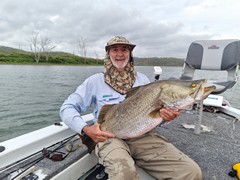


Reef / Structure Habitat
Current rarely moves cleanly across a reef.
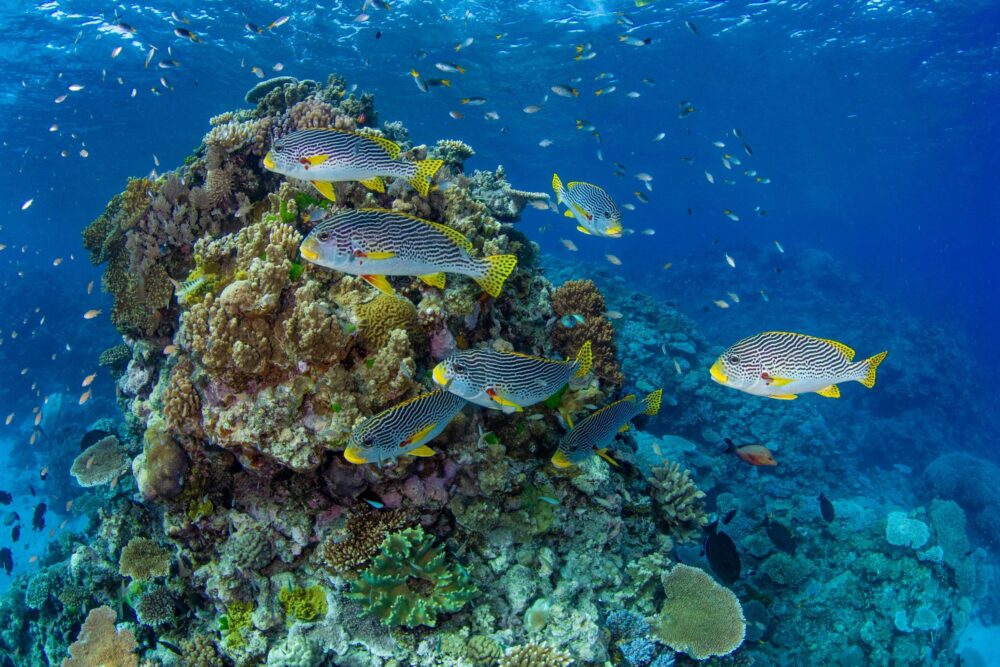
As water meets these features, it is redirected — pushed upward, slowed, split, and curled back on itself. Small pockets of calmer water form beside areas of increased pressure. Food is carried into these zones and held there, often longer than it would be in open water.
Over time, this creates concentration.
Baitfish gather in and around the structure, using it for both shelter and feeding opportunity. Smaller species move through crevices and along edges, while others hold just above the reef, adjusting constantly to the flow.
Predators, in turn, become part of this framework.
Some remain close to the structure, using it for concealment and short, controlled movements. Others sit slightly wider, positioned to intercept what moves beyond the immediate reef. The relationship is consistent — proximity to structure provides both opportunity and advantage.
What becomes clear is that not all structure is equal.
A reef may stretch for hundreds of metres, yet only certain sections will consistently hold life. A slight change in depth, a sharper edge, or a more pronounced interaction with current can be enough to distinguish one area from another.
These differences are rarely obvious at first.
They reveal themselves gradually, through repeated observation and an understanding of how water behaves when it encounters form. A reef is not just a place — it is a series of interactions, each contributing to where life settles and moves.
Light also plays its part.
In clearer water, structure can cast defined shadows, creating contrast that fish use to their advantage. Some species remain within these darker areas, while others move along the boundary between light and shade. As the angle of the sun changes, so too does this dynamic, subtly shifting where fish are likely to be found.
There is a sense of stability in these environments.
Unlike offshore systems, where conditions can move quickly across large distances, reef and structure habitats tend to hold their character over time. They change, but more slowly — shaped by tides, current strength, and seasonal variation rather than constant relocation.
This allows understanding to build in a different way.
Familiarity becomes valuable. The more time spent observing a particular structure, the more its patterns begin to emerge — where water accelerates, where it settles, and where life consistently gathers.
It is a more grounded form of fishing.
Less about searching for signs across distance, and more about understanding a defined space in detail. Within that space, complexity exists — layered, consistent, and quietly precise.
Reef and structure environments offer a kind of clarity.
Not because they are simple, but because their patterns, once recognised, tend to hold. And in that consistency, there is a depth of understanding that rewards those willing to return and observe closely.