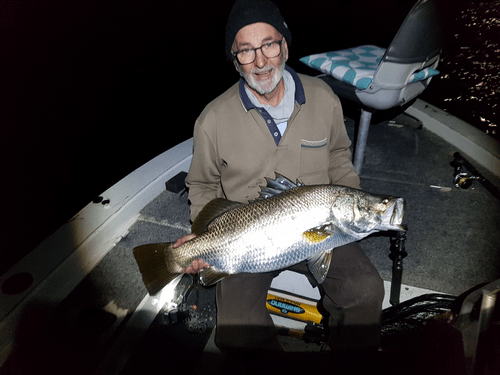
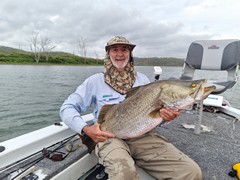
Threadfin salmon are one of those fish where you need to understand the water more than the fish.
They are not usually sitting in obvious places waiting to be caught. They move with the tide, they follow the food, and they use the current to their advantage.
For me, the key to threadfin salmon is river speed.
When the tide is running out, prawns, baitfish and other food are pushed out of drains, off flats and along the edges of channels. Threadfin salmon will often move into position where that food is being carried past them.
They are not always sitting in the fastest water. More often, they hold where fast water meets slower or deeper water. That might be the edge of a current line, the mouth of a drain, the back of a sand bar, a bend in the river, or where shallow water drops into a deeper channel.
That is the sort of water I look for.
I want enough current to bring food to the fish, but not so much that the fish has to work too hard to stay there. A good threadfin spot often has fast water nearby, deeper or slower water beside it, and some kind of edge where food is being funnelled through.
On a run-out tide, I like to look for places where water is draining off flats or out of mangroves. Threadfin will often sit near those exits, waiting for prawns and baitfish to be pushed into reach.
On a run-in tide, the fish can move back up with the water. They may follow bait and prawns onto flats, along gutters, or back toward mangrove edges. The pattern can reverse, but the same rule applies: find where the current is moving food.
Threadfin salmon also suit dirty water. Their long feelers help them find food along the bottom, so they do not need clear water to feed well. In fact, dirty water can help them because it gives them cover and lets them hunt more confidently.
When I fish for them, I am usually thinking about four things:
- where the current is running;
- where the food is being pushed;
- where the deeper or slower holding water is;
- whether my bait, lure or fly is getting down close enough to the bottom.
Threadfin eat prawns, small baitfish, mullet, herring, crabs and other small creatures that live in the river. So the best presentations are usually things that look like prawns or small fish and can be worked near the bottom.
The biggest mistake is casting randomly into open water. Threadfin fishing is about reading the river.
Find the current seam.
Find the drain.
Find the deeper edge.
Find where the food has to pass.
That is where the salmon are most likely to be.
This follows the same practical fishing style as the bream reference article, but with the focus shifted to current, tide, depth and food movement.